

What Is a Metaphor for Police Brutality?
A metaphor for police brutality is a symbolic phrase that represents misuse of authority or excessive force.
Instead of describing violence directly, metaphors compare the situation to another image or idea. This creates emotional meaning while keeping the language more creative and respectful.
These metaphors are common in:
- English grammar exercises
- Social discussions
- Poetry and literature
- Business communication about public trust
- Academic writing
They also help ESL learners understand abstract ideas more clearly.
Most Powerful Metaphor for Police Brutality
“A shield turned into a sword”
This is one of the strongest and easiest metaphors to understand.
- A shield represents protection and safety
- A sword represents harm and force
The metaphor shows that something meant to protect people has become dangerous instead.
Example:
“The community felt like the shield had turned into a sword.”
This sentence symbolizes broken trust and fear.
Other Powerful Metaphors for Police Brutality
“Justice walking with a limp”
This means justice exists, but it is weak or damaged.
“A cracked badge”
The badge symbolizes trust and authority. A crack shows that trust is broken.
“The scale tipped by force”
Justice should be balanced, but force has pushed fairness aside.
“A storm in uniform”
Authority feels chaotic, frightening, and uncontrolled.
“Iron hands over justice”
Power is controlling fairness too harshly.
“A broken compass of law”
The system has lost its moral direction.
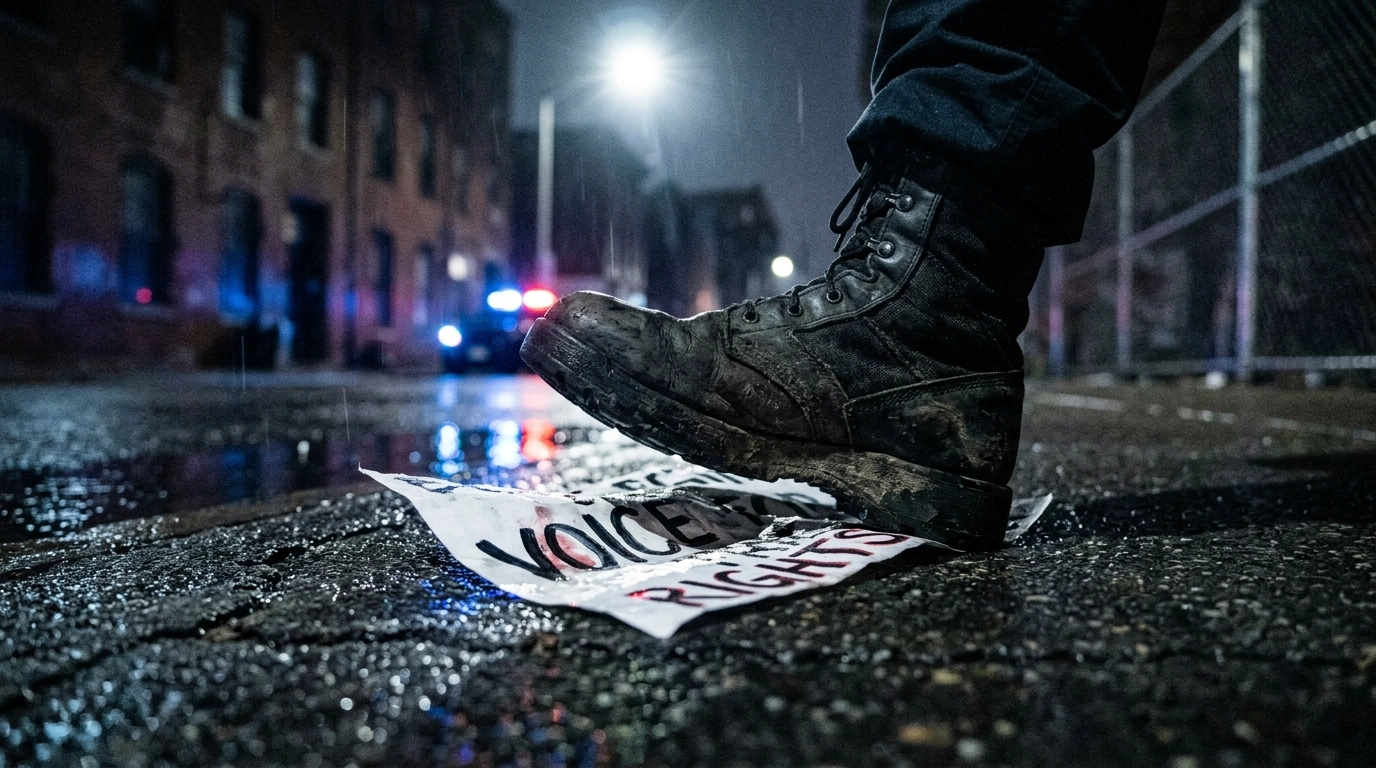
Metaphor for Police Brutality vs Literal Language
| Style | Example | Meaning |
|---|---|---|
| Literal language | “The officer used excessive force.” | Direct explanation |
| Metaphorical language | “The shield became a sword.” | Symbolic emotional meaning |
| Literal language | “People lost trust.” | Straight statement |
| Metaphorical language | “The badge began to crack.” | Symbolic loss of trust |
Metaphors make writing more powerful and memorable.
Real-Life Examples Using a Metaphor for Police Brutality
Dialogue 1
Person A: “Why are people protesting?”
Person B: “Because the shield turned into a sword.”
🎯 Lesson: Protection became harmful.
Dialogue 2
Teacher: “What does ‘justice walking with a limp’ mean?”
Student: “It means fairness is damaged.”
🎯 Lesson: Justice is weak or unequal.
Dialogue 3
Reporter: “Public trust is falling.”
Citizen: “Yes, the badge has started to crack.”
🎯 Lesson: Authority has lost credibility.
Dialogue 4
Writer: “Why use metaphors in essays?”
Editor: “They explain emotions more clearly.”
🎯 Lesson: Metaphors add deeper meaning.
Dialogue 5
Student: “What does ‘storm in uniform’ symbolize?”
Teacher: “Fear and uncontrolled authority.”
🎯 Lesson: Uniforms symbolize power, while storms symbolize chaos.
Dialogue 6
Citizen: “The scale tipped by force.”
Friend: “So justice was not balanced?”
Citizen: “Exactly.”
🎯 Lesson: Fairness was overpowered.
When to Use These Metaphors Correctly
You can use a metaphor for police brutality in:
- School essays
- English grammar practice
- Poetry and creative writing
- Social commentary
- Discussions about justice
- Public speaking
- Literature analysis
These metaphors work best when discussing:
- power
- authority
- fairness
- trust
- law and justice
Common Mistakes Learners Make
Using metaphors too literally
Wrong: “The officer was actually a storm.”
Correct: “The officer became a storm in uniform.”
Mixing symbols badly
Wrong: “The badge barked loudly.”
Correct: “The cracked badge showed broken trust.”
Overcomplicating the metaphor
Simple metaphors are stronger and easier to understand.
Forgetting emotional meaning
A metaphor should connect to feelings like fear, injustice, or disappointment.
Quick Memory Trick
Remember this simple rule:
👉 Protection + Harm = Strong metaphor for police brutality
Examples:
- Shield → sword
- Badge → cracked badge
- Justice → limping justice
This makes symbolic writing easier to create.