

What Is a Metaphor for Laughing Constantly?
A metaphor for laughing constantly compares nonstop laughter to another energetic or overflowing image.
It describes joy, amusement, or uncontrollable laughter without directly saying it.
Example
- “Her laughter was a waterfall.”
This does not mean real water existed. It means her laughter flowed continuously and naturally.
Writers use laughter metaphors to describe:
- happiness
- excitement
- humor
- emotional release
- playful energy
Common Metaphors for Constant Laughter
Here are some popular and creative metaphors.
| Metaphor | Meaning |
|---|---|
| A bubbling fountain | Endless joyful laughter |
| Rolling thunder | Loud unstoppable laughter |
| Fireworks in the air | Bursts of excitement and joy |
| A waterfall | Continuous flowing laughter |
| A ticking machine | Constant repeated laughter |
| Sunshine spilling everywhere | Warm joyful energy |
| A popping popcorn machine | Quick nonstop laughter |
| Wind chimes in a storm | Light but constant laughter |
These metaphors work well in both creative and casual writing.
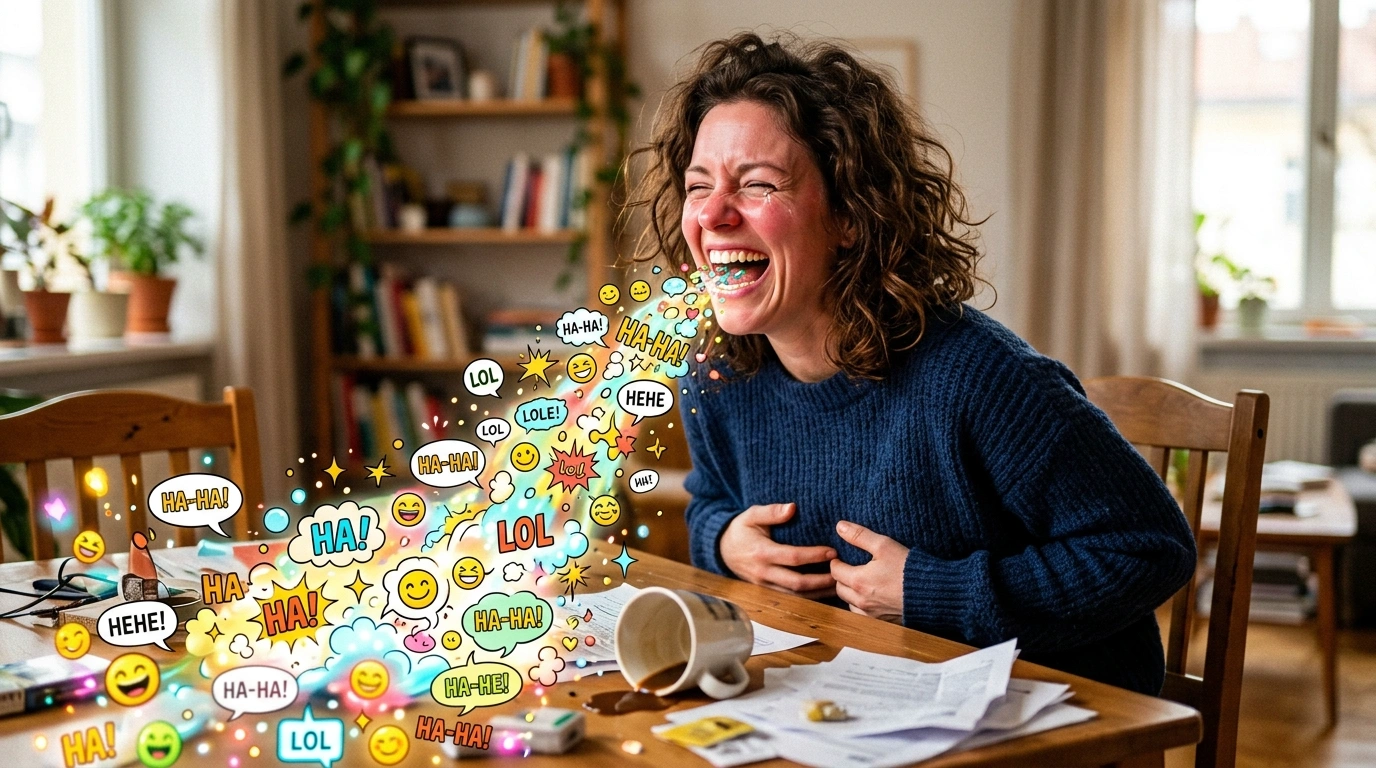
Funny Metaphors for Laughing Constantly
1. A Popcorn Machine
This metaphor describes quick repeated bursts of laughter.
Example:
“His laughter was a popcorn machine during the movie.”
🎯 Meaning: He laughed nonstop in short energetic bursts.
2. A Hyena at a Comedy Show
This metaphor creates humorous imagery.
Example:
“She sounded like a hyena at a comedy club.”
🎯 Meaning: Her laughter was loud and uncontrollable.
3. A Car Alarm That Wouldn’t Stop
This playful metaphor suggests endless laughter.
Example:
“After the joke, he became a car alarm nobody could silence.”
🎯 Meaning: He kept laughing for a long time.
Poetic Metaphors for Laughter
Poetry often uses softer and more emotional imagery.
A Waterfall of Joy
Example:
“Her laughter poured through the room like a waterfall.”
🎯 Meaning: Her joy felt natural, powerful, and continuous.
Bells Dancing in the Wind
Example:
“Her laughter danced like silver bells in the wind.”
🎯 Meaning: The laughter sounded light, musical, and beautiful.
Fireworks Across the Night
Example:
“Their laughter exploded like fireworks beneath the stars.”
🎯 Meaning: Their happiness filled the moment with excitement.
Metaphors for Loud Laughter
Some metaphors focus on the volume and energy of laughter.
Examples
- “His laugh was thunder shaking the walls.”
- “The room erupted into a storm of laughter.”
- “Her laugh roared like an engine.”
- “Their laughter rolled through the house like crashing waves.”
These metaphors create strong sound imagery.
Metaphors for Happy and Warm Laughter
Gentle laughter can also be described beautifully.
Examples
- “Her laughter was sunshine in winter.”
- “His laugh floated like music through the room.”
- “Their joy spread like warm light.”
- “Her laughter bloomed like spring flowers.”
These metaphors feel softer and more emotional.
Using Laughter Metaphors in Writing
Strong metaphors make scenes feel more alive.
Weak Sentence
- “They laughed a lot.”
Stronger Version
- “Their laughter burst through the room like fireworks.”
The second sentence creates clearer emotion and energy.
Laughter metaphors work especially well in:
- storytelling
- comedy writing
- poetry
- romance scenes
- personal memories
Common Mistakes Writers Make
Overusing Loud Metaphors
Not every laugh needs to sound explosive.
Sometimes soft imagery works better.
Mixing Different Images
Keep the metaphor focused.
❌ “Her laughter was thunder blooming like flowers.”
This feels confusing because the images clash.
Repeating the Same Metaphor
Instead of always using “thunder,” try:
- fountains
- fireworks
- waterfalls
- bells
- sunshine
This keeps writing fresh and creative.
Quick Memory Trick
To create a strong metaphor for laughing constantly, think about things that:
- overflow
- repeat nonstop
- burst with energy
- spread happiness
- create sound and movement
Then connect them to laughter.
🧠 Easy Rule:
If the image feels energetic, flowing, or joyful, it can become a great laughter metaphor.
Examples:
- waterfalls
- fireworks
- fountains
- bells
- waves
- sunshine