
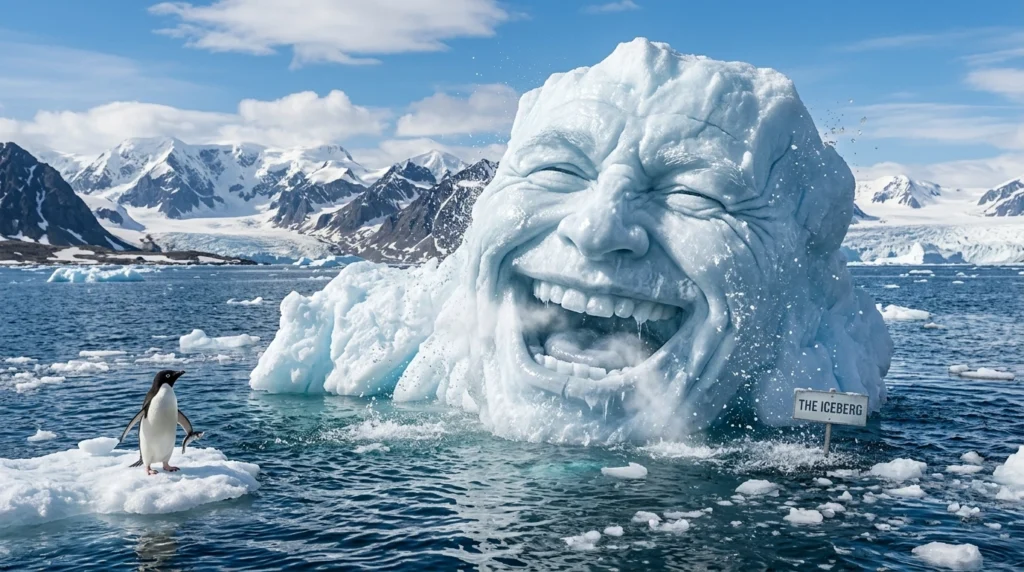
What Does “Ice” Represent in Metaphors?
In English, ice often represents:
- Coldness (weather or feelings)
- Emotional distance
- Silence or lack of response
- Stillness or no movement
- Calm but unfriendly behavior
Simple examples:
- His voice was ice.
- The room turned into ice.
- Her heart became ice after the breakup.
So, ice is not just frozen water—it is also a symbol of emotion and atmosphere.
What Is a Metaphor for Ice?
A metaphor for ice is a comparison where ice is used to describe feelings, situations, or behavior without saying “cold” directly.
Instead of saying:
- “He is emotionally cold”
You can say:
- “He has an ice-covered heart.”
This makes English more expressive and visual.
Powerful Metaphors for Ice (With Meanings)
1. “A heart made of ice”
Means a person who shows no emotion or warmth.
2. “Words like shards of ice”
Means speech that is harsh, cold, or hurtful.
3. “An ice wall between us”
Means emotional distance between two people.
4. “A frozen ocean of silence”
Means complete silence with no communication.
5. “Ice running through his veins”
Means a person who is calm, emotionless, or fearless.
6. “A room turned into ice”
Means a very uncomfortable or cold emotional atmosphere.
7. “Her smile melted like ice”
Means something warm disappears quickly under pressure or emotion.
Metaphor Examples in Real Life
1.
After the argument, there was an ice wall between them.
🎯 Lesson: Conflict creates emotional distance.
2.
His words were shards of ice.
🎯 Lesson: Words can feel emotionally painful.
3.
She has a heart made of ice after the betrayal.
🎯 Lesson: Pain can make people emotionally cold.
4.
The meeting ended in a frozen ocean of silence.
🎯 Lesson: Silence can feel heavy and uncomfortable.
5.
He faced danger with ice running through his veins.
🎯 Lesson: Calmness under pressure.

When to Use Metaphor for Ice
Use these expressions in:
- ✍️ Creative writing
- 📚 English essays
- 🎤 IELTS speaking
- 💬 Storytelling
- 🧠 Emotional descriptions
They help you sound more natural and expressive in English.
Common Mistakes Learners Make
- Using too many metaphors in one sentence
→ Keep it simple and clear - Confusing literal and emotional meaning
→ Ice is not always about temperature - Overcomplicating sentences
→ Simple images are more powerful
Correct usage:
- “An ice wall between us” (clear emotional meaning)
Quick Memory Trick
👉 “Ice = Cold + Silence + Emotionless”
Think:
- Ice wall → distance
- Ice heart → no emotion
- Ice words → harsh speech
This helps you quickly choose the right metaphor.