
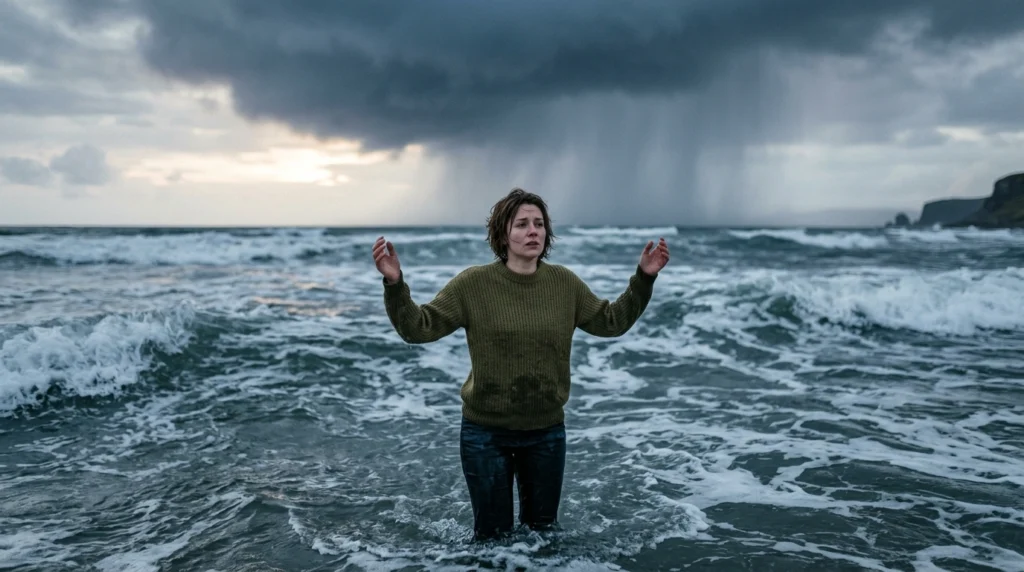
What Is a Metaphor for Feeling?
A metaphor for feeling is a way of describing emotions by comparing them to something else without using “like” or “as.”
It shows emotion as a direct image or object.
Examples:
- “I am a storm of anger.”
- “She is sunshine today.”
- “My heart is a broken glass.”
These are not real situations, but they help express strong emotions clearly.
Why We Use Metaphor for Feeling
We use it because emotions are difficult to explain directly.
Instead of:
- “I feel stressed”
We say:
- “My mind is a heavy rock”
This helps others feel your emotion, not just understand words.
It is widely used in:
- English grammar learning
- Literature and poetry
- Daily conversation
- Business communication (for emotional impact)
Common Metaphor for Feeling Examples
- “I am drowning in fear” → fear
- “My heart is on fire” → passion or anger
- “She is walking sunshine” → happiness
- “He is a dark cloud” → sadness
- “I feel like a broken mirror” → emotional pain
- “My thoughts are a storm” → confusion
- “I am floating on air” → extreme happiness

Metaphor for Feeling vs Literal Meaning
| Feature | Metaphor for Feeling | Literal Meaning |
|---|---|---|
| Meaning | Emotional expression | Real fact |
| Example | “I am drowning in sadness” | Actual drowning |
| Purpose | Express feelings | Describe reality |
| Style | Creative language | Direct language |
Real-Life Examples (Simple Dialogues)
1. A: How are you today?
B: I am a storm inside.
🎯 Lesson: Strong emotions can be shown using metaphor.
2. A: Why are you silent?
B: My heart is heavy stone today.
🎯 Lesson: Sadness can feel like weight.
3. A: You look very happy!
B: I am sunshine right now.
🎯 Lesson: Happiness is often linked with light.
4. A: Are you angry?
B: Yes, I am fire inside.
🎯 Lesson: Anger is shown as heat or fire.
5. A: What happened in the exam?
B: My mind was a blank wall.
🎯 Lesson: Stress can block thinking.
6. A: Feeling better now?
B: Yes, I am light again.
🎯 Lesson: Recovery is shown as brightness.
When to Use Metaphor for Feeling
Use it in:
- Daily conversation
- Story writing
- Poetry
- Creative English speaking
- Emotional expression
Avoid it in:
- Legal documents
- Formal reports
- Technical writing
Common Mistakes Learners Make
- ❌ Taking metaphor literally
→ “I am actually fire” (wrong meaning) - ❌ Mixing too many images in one sentence
→ Confuses meaning - ❌ Thinking it is grammar rule
→ It is language style, not rule - ❌ Translating word-by-word from native language
→ Sounds unnatural in English
These mistakes happen due to grammar confusion and verb forms misunderstanding in emotional English usage.
Quick Memory Trick
👉 Feeling = Emotion + Picture
If you can imagine a picture, it is a metaphor.
Examples:
- Sadness = rain or darkness
- Happiness = sunshine or flying
- Anger = fire or storm