
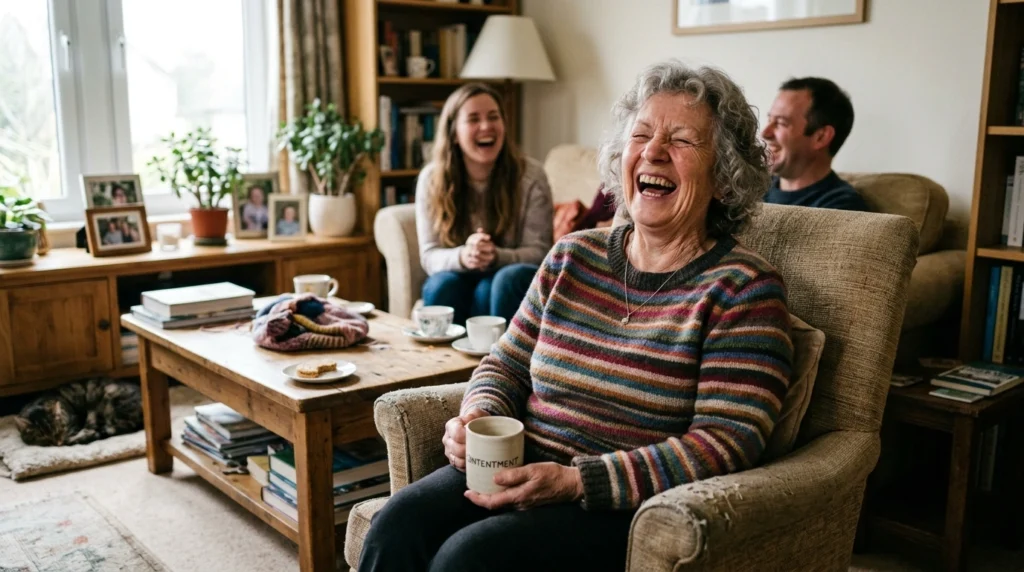
What Does “Contentment” Mean?
Contentment means:
- Feeling satisfied with life
- Being peaceful with what you have
- Not wanting more
- Inner calm and emotional balance
Simple examples:
- She felt contentment in her simple life.
- His face showed quiet contentment.
- Contentment is better than constant desire.
So, contentment meaning is peaceful satisfaction from within.
What Is a Metaphor for Contentment?
A metaphor for contentment is a comparison that describes inner peace using imagery instead of direct explanation.
Instead of saying:
- “I feel content”
You can say:
- “My heart is a still lake at sunrise.”
This makes emotions more vivid and meaningful.
Powerful Metaphors for Contentment (With Meanings)
1. “A still lake at sunrise”
Means peaceful and calm happiness.
2. “A warm blanket on a cold night”
Means comfort, safety, and satisfaction.
3. “A gentle river flowing without rush”
Means a peaceful and stress-free life.
4. “A garden blooming in silence”
Means happiness that grows quietly.
5. “A soft light filling the heart”
Means inner peace and emotional warmth.
6. “A calm sky after the storm”
Means relief and satisfaction after struggle.
7. “A quiet room full of sunlight”
Means simple, peaceful happiness.
Metaphor Examples in Real Life
1.
After years of struggle, her life became a still lake at sunrise.
🎯 Lesson: Contentment comes after hardship.
2.
He lives like a gentle river flowing without rush.
🎯 Lesson: Peaceful life has no pressure.
3.
Their home felt like a warm blanket on a cold night.
🎯 Lesson: Comfort brings emotional satisfaction.
4.
Her heart was a garden blooming in silence.
🎯 Lesson: Happiness can be quiet.
5.
After achieving his goals, he felt like a calm sky after the storm.
🎯 Lesson: Relief brings contentment.

When to Use Metaphor for Contentment
Use a metaphor for contentment in:
- ✍️ Creative writing
- 📚 English essays
- 🎤 IELTS speaking
- 💬 Personal reflections
- 🧠 Emotional storytelling
They help express peaceful emotions beautifully.
Common Mistakes Learners Make
- Confusing contentment with excitement
→ Contentment is calm, not energetic - Using overly complex images
→ Simple metaphors are more powerful - Mixing negative emotions
→ Contentment should feel peaceful
Correct usage:
- “My heart is a still lake at sunrise.”
Quick Memory Trick
👉 “Contentment = Calm + Simple + Peaceful”
Think:
- Lake → stillness
- Blanket → comfort
- Sky → calmness
This helps you quickly build your own metaphors.